Some permit documents are transmitted electronically to customs authorities by government agencies through the Single Window for International Trade portal. Customs authorities are not entitled to request these documents from the importer again.
Customs checks not only each document individually but also their consistency with one another. The product description, number of packages, weight, container number, and consignee must match across all documents. Any discrepancy may give the customs inspector grounds to request an explanation or order an inspection of the shipment.
Contract and Invoice: Where Customs Value Verification Begins
Customs value is the basis for all payments made during import: import duty, 20% VAT, and excise duty for excisable goods. For this reason, customs authorities examine the declared value particularly carefully.
The Customs Code provides for six methods of determining customs value. The primary method is based on the transaction value — the price the importer has actually paid or is required to pay the supplier. Customs authorities apply other methods when the submitted documents do not confirm the declared price. In such cases, the value is determined based on customs data rather than the price stated in the importer’s contract.
What Is Included in Customs Value
The price stated on the invoice is only part of the customs value. It also includes the cost of transporting the goods to the point of entry into the customs territory of Ukraine and insurance costs, if these are not included in the price.
What exactly is added depends on the delivery terms under Incoterms. Under EXW or FOB terms, freight is not included in the price, so customs authorities will add the cost of transportation to the Ukrainian border. Carrier invoices will be required. Under CIF Gdansk terms, ocean freight is already included in the price, but transportation from Gdansk to the border must also be included and documented.
Contract
Ukrainian law does not establish a mandatory format for a foreign trade contract. However, for customs clearance, it should include:
- full details of the parties;
- the subject of the contract and a specification: product description, quantity, unit price, and total amount;
- Incoterms 2020 delivery terms specifying the exact location, for example, “FCA Ningbo” or “DAP Yahodyn”;
- the currency, payment procedure, and payment deadlines;
- signatures of authorized representatives.
If the contract is a framework agreement, each shipment should be documented with a separate specification or appendix. This allows customs authorities to link a specific shipment to the contract.
Payment deadlines in the contract should be coordinated with currency regulations. During martial law, the NBU has established maximum settlement periods for imports, which are discussed in the section on war-related changes.
Invoice
The invoice is the main document confirming the value of the goods. It should contain:
- a number and date, as well as a reference to the contract;
- the names and addresses of the seller and buyer;
- a sufficiently detailed product description for classification purposes: not simply “spare parts,” but “ball bearings, inner diameter 25 mm”;
- the quantity, unit price, and total amount;
- the currency and delivery terms;
- preferably, the country of origin and weight.
A general product description is one of the common reasons for customs inquiries. Based on the invoice, the inspector should be able to understand exactly what is being imported without requiring additional explanations.
If goods are imported outside a sale and purchase agreement, for example as free samples, a pro forma invoice is submitted instead of a commercial invoice.
The amount stated on the invoice must match the payment documents. After an advance payment, a bank statement also becomes evidence of the price, and any discrepancy with the invoice will need to be explained.
When Customs Authorities Question the Declared Value
Customs authorities compare the declared price with data on the prices of identical and similar goods. If the documents contain discrepancies, signs of forgery, or insufficient information to calculate the customs value, the inspector may submit a written request for additional documents. Under Article 53 of the Customs Code, the importer has 10 calendar days to provide them.
The list of documents that customs authorities may request is limited. It includes:
- agreements with third parties related to the shipment;
- invoices for commissions and intermediary services;
- an extract from accounting records;
- manufacturer’s catalogues, specifications, or price lists;
- a copy of the export customs declaration;
- conclusions from specialized expert organizations regarding the quality and value of the goods.
Customs authorities are not entitled to request documents outside this list. However, the importer may submit them voluntarily. It is advisable to obtain the manufacturer’s price list and a copy of the export declaration from the supplier in advance, especially for the first shipment from a new partner.
If the Customs Value Has Been Adjusted
Under Article 55 of the Customs Code, customs authorities formalize an adjustment through a written decision. The decision specifies why the declared value was not accepted and which documents may be used to confirm it.
There are two possible courses of action. The first is to accept the decision and pay customs charges based on the value determined by customs authorities. The second is to disagree with the decision. In that case, the goods may be released for free circulation provided that payments based on the declared value are made and a financial guarantee covering the difference is provided. The importer may then submit additional documents or challenge the decision before a higher customs authority or in court.
Understating the value on an invoice is a violation of customs regulations. Under Article 485 of the Customs Code, actions aimed at evading customs payments may result in a fine equal to 100% of the amount of unpaid customs charges.
CMR, Bill of Lading, and Air Waybill: What Each Document Confirms
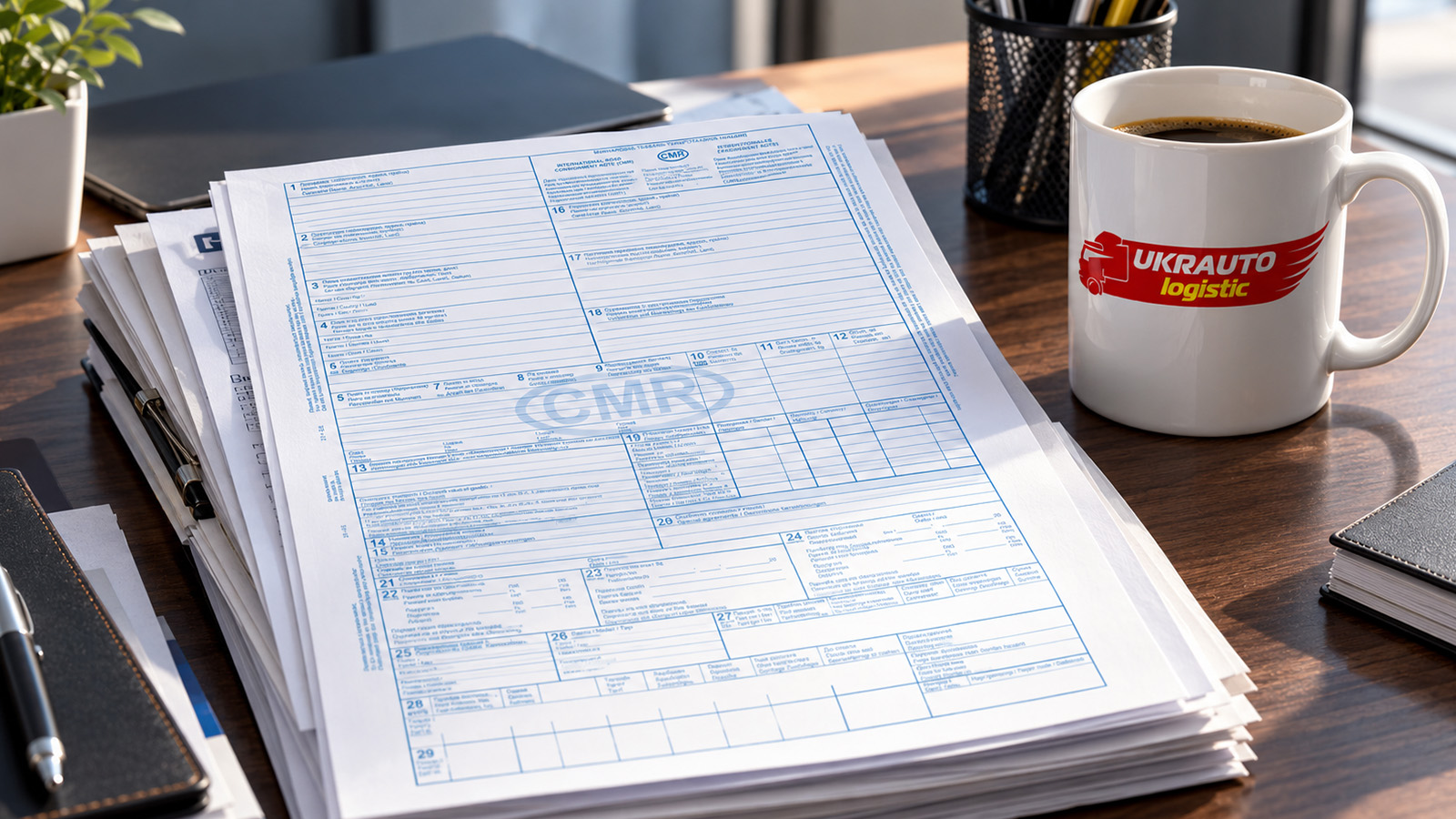
A transport document records who shipped the cargo, who will receive it, how many packages and what weight the carrier accepted, and which route the shipment follows. For customs authorities, it also establishes the link between the customs declaration and the specific shipment.
The type of document depends on the mode of transport.
CMR — for Road Transport
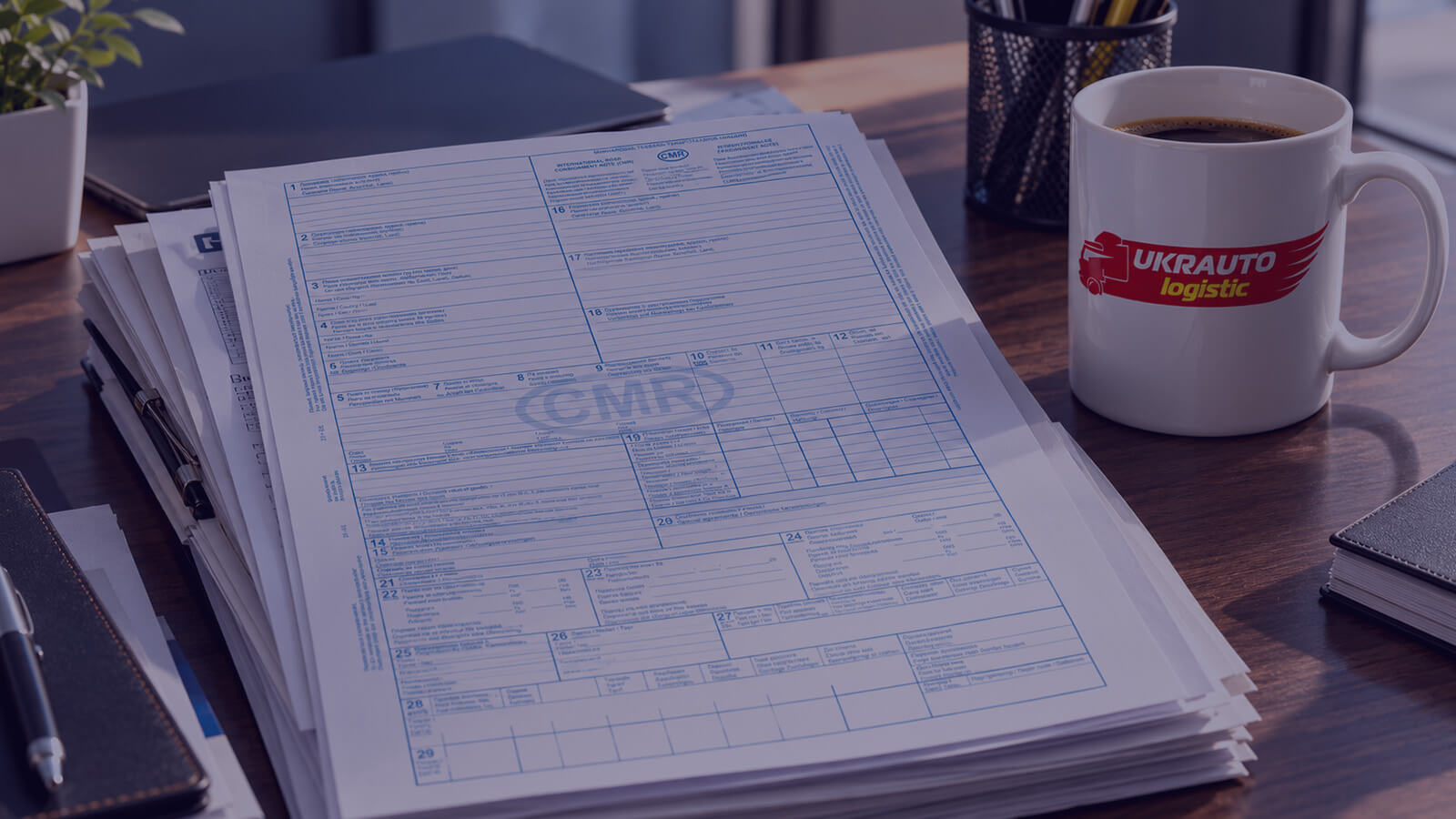
A CMR is an international road consignment note issued under the 1956 Convention on the Contract for the International Carriage of Goods by Road. It is prepared in at least three original copies: the first remains with the sender, the second accompanies the cargo, and the third remains with the carrier.
At the border, the carrier submits the CMR together with vehicle documents and commercial documents for the cargo. Before the vehicle departs, the following details should be checked in the CMR:
- the consignee: this should be the buyer under the contract or a person explicitly specified in the agreement;
- the number of packages and gross weight: these must match the packing list;
- the cargo description: without discrepancies compared with the invoice;
- the tractor and trailer registration numbers.
Since October 1, 2022, Ukraine has been a party to the Convention on a Common Transit Procedure. Cargo from the EU may cross several borders under a single T1 transit declaration and undergo customs clearance at an inland customs office in Ukraine. Data entered in the transit declaration at departure are verified against the documents at the customs office of destination.
Bill of Lading — for Sea Freight
A Bill of Lading (B/L) is issued by the carrier or shipping line. Unlike a CMR, it is a document of title: the holder of the original is entitled to take delivery of the cargo at the port.
If the goods have been paid for but the original bills of lading remain with the supplier or are delayed in transit, the container will remain at the port. The consignee will be charged according to the shipping line and terminal tariffs for storage and container use beyond the free period.
Bills of lading may be issued in three forms:
- original Bill of Lading. A set of three originals is usually issued, and one original is sufficient to take delivery of the cargo;
- telex release. The supplier surrenders the originals to the shipping line at the port of departure, and the cargo is released without paper originals;
- Sea Waybill. This is not a document of title, and the cargo is released to the consignee specified in the waybill.
The form of the Bill of Lading should be agreed with the supplier at the contract stage, together with the payment terms.
The Bill of Lading should be checked for the consignee and notify party, container and seal numbers, number of packages, and weight. The seal number is verified when the container is received, and any discrepancy may be grounds for an inspection.
Some sea shipments destined for Ukraine arrive at ports in neighboring countries and are then transported by road or rail. Under this arrangement, a separate document is issued for each stage: a Bill of Lading to the port, followed by a CMR or railway consignment note from the port to Ukraine. The cargo description, weight, and container number must match in all these documents.
Air Waybill — for Air Freight
An Air Waybill (AWB) confirms that the carrier has accepted the cargo. It is not a document of title: the shipment is released to the consignee specified in the waybill.
For consolidated shipments, two waybills are issued. The airline issues a Master Air Waybill (MAWB) for the freight forwarder’s entire shipment, while the freight forwarder issues a House Air Waybill (HAWB) for the cargo of a specific customer. The House Air Waybill is used for customs clearance. The number of packages and weight stated in it must match the packing list.
Railway Consignment Note — for Rail Transport
For rail transport, consignment notes issued under international agreements are used: SMGS, CIM, or a combined CIM/SMGS consignment note when the route passes through countries using different systems. The same information is checked as in a CMR: the consignee, number of packages, weight, and wagon or container numbers.
How to Check Documents Before Shipment
Discrepancies in transport documents are easier to correct before loading. To do this, request draft copies of the invoice and packing list from the supplier and, for sea freight, a draft Bill of Lading as well. These documents should be checked against one another and against the contract before the carrier signs them.
Origin of Goods: The Customs Duty Rate Depends on It
The country of origin determines the import duty rate that the importer will pay. If a free trade agreement is in force with the relevant country, the duty on the goods may be zero or reduced. However, a preferential rate applies only if the origin is documented.
Article 44 of the Customs Code establishes when proof of origin is mandatory:
- the goods are imported under a preferential import duty rate;
- the goods are subject to quantitative restrictions (quotas), anti-dumping, countervailing, or safeguard measures;
- this is required by Ukrainian law or international agreements.
In addition, customs authorities may request proof of origin if there are grounds to believe that the goods originate from a country whose products are prohibited from being imported. This is particularly relevant during the war: goods of Russian origin are prohibited from being imported into Ukraine.
Imports from the EU
The EU–Ukraine Association Agreement provides for zero or reduced customs duty rates on most goods of European origin. Since January 1, 2025, Ukraine has applied the updated rules of the Regional Convention on pan-Euro-Mediterranean preferential rules of origin (PEM Convention).
The origin of goods from the EU may be confirmed by one of two documents:
- EUR.1 movement certificate. It is issued by the customs authorities of an EU country at the exporter’s request;
- origin declaration. It is made by the exporter directly on the invoice or another commercial document. An approved exporter may issue it for a shipment of any value, while another exporter may do so only for shipments with a value of up to EUR 6,000.
One of the mistakes that may prevent a preferential rate from being applied concerns Box 2 of the EUR.1 certificate. For goods imported into Ukraine, it should state “European Union” or “EU,” rather than the name of a specific Member State.
It is therefore advisable to agree with the supplier in advance who will prepare the proof of origin and in what form, and to obtain a copy before shipment. If the supplier is not an approved exporter and the shipment is worth more than EUR 6,000, an EUR.1 certificate will be required. More information about routes and terms is available on the cargo transportation in Europe page.
Imports from Turkey
The free trade agreement between Ukraine and Turkey entered into force on October 1, 2026. It was signed in 2022, and the Verkhovna Rada ratified it in July 2026.
Preferences for the two directions will take effect at different times. For Ukrainian exports to Turkey, they have applied since October 1, 2026. For imports of goods of Turkish origin into Ukraine, they will apply from January 1, 2027. Therefore, shipments from Turkey undergoing customs clearance before the end of 2026 are cleared at the standard duty rates.
Proof of origin for Turkish goods is the same as for goods from the EU: an EUR.1 certificate or an origin declaration. The threshold for a declaration made by an exporter who is not approved is also EUR 6,000 per shipment.
Imports from China and Other Countries Without a Free Trade Agreement
Ukraine does not have a free trade agreement with China, so preferential customs duty rates are not available for Chinese goods. In this case, a certificate of origin is mandatory if the goods are subject to anti-dumping, countervailing, or safeguard measures or quotas. Current measures are published by the Ministry of Economy, and it is advisable to check whether they apply to your goods at the supplier selection stage. Information about routes and transit times is available on the container transportation from China page.
In addition to the EU and Turkey, Ukraine has free trade agreements with, among others, the EFTA countries, the United Kingdom, Canada, Israel, Georgia, North Macedonia, and Montenegro. Each agreement has its own rules of origin and document formats. These should be clarified with a customs broker or in the text of the relevant agreement before shipment.
Permit Documents: Without Them, Goods Cannot Be Released for Free Circulation
Some goods may be released by customs only after they have undergone state control by other authorities. Requirements depend on the goods’ Ukrainian Commodity Classification for Foreign Economic Activity (UKT ZED) code, so they should be determined before signing the contract rather than after the shipment arrives.
Phytosanitary, Veterinary, and Food Safety Controls
These types of control are carried out by the State Service of Ukraine on Food Safety and Consumer Protection. They apply to:
- plants, seeds, grain, timber, and other products of plant origin — phytosanitary control;
- animals, products of animal origin, and feed — veterinary and sanitary control;
- food products and materials intended to come into contact with food.
For such goods, certificates issued by the exporting country will be required: phytosanitary or veterinary certificates. Since September 19, 2025, the list of documents and information submitted to the State Service of Ukraine on Food Safety and Consumer Protection has been defined by Ministry of Finance Order No. 352. The scope of requirements depends on the UKT ZED code and the product description.
The certificate issued by the exporting country must be obtained before shipment. Obtaining it after the cargo has left the country of origin can be difficult and, in some cases, impossible.
Compliance with Technical Regulations
Separate requirements apply to non-food products covered by technical regulations. These include, among others, electrical equipment, machinery, toys, construction materials, and personal protective equipment. Upon import, customs authorities check the presence of conformity markings and supporting documents and may involve market surveillance authorities where a risk is identified. The procedure for such control is defined by the Law of Ukraine “On State Market Surveillance and Control of Non-Food Products.”
Importers should request a declaration of conformity and technical documentation from the supplier in advance. If the product is intended solely for the EU market, determine whether Ukraine recognizes the relevant conformity assessment or whether a procedure through a Ukrainian conformity assessment body is required.
Other Permits and Licenses
Depending on the goods, other documents may also be required:
- an import license — for goods subject to import licensing;
- a permit from the State Export Control Service — for dual-use goods;
- documents related to registration — for medicinal products, plant protection products, and other goods that may be placed on the Ukrainian market only after state registration.
How to Find Out in Advance Which Permits Are Required
Everything begins with the correct UKT ZED code: it determines both the customs duty rate and the list of applicable types of control. The code can be determined independently, through a customs broker, or by obtaining a preliminary customs classification decision. The State Customs Service has also launched an AI-based digital service that helps determine the code and substantiate the classification.
Permit documents issued electronically by government authorities are transmitted to customs through the Single Window for International Trade. Customs authorities are not entitled to request them from the importer again.
What the War Has Changed
Martial law has introduced several requirements and benefits into customs regulations that directly affect imports.
Maximum Settlement Periods for Imports
During martial law, the maximum settlement period for imports of goods is 180 calendar days. The rule is established in paragraph 14² of NBU Board Resolution No. 18. The NBU has established different periods for certain categories of goods.
In practice, this means that if an importer makes an advance payment, the goods must arrive in Ukraine within 180 days from the date of payment. Missing the deadline constitutes a violation of currency regulations. Under the Law of Ukraine “On Currency and Currency Operations,” a penalty of 0.3% of the value of the undelivered goods is charged for each day of delay, up to a maximum equal to the amount of the transaction itself.
Delivery deadlines in the contract should be aligned with this limit. This is particularly important for goods manufactured to order or transported by sea with long transit times.
Benefits for Importing Energy Equipment
The exemption from import duty and VAT for energy equipment has been extended until January 1, 2029, by Laws No. 4698-IX and No. 4710-IX. The benefit applies under code “245” of the Classifier of Customs Payment Exemptions and is available to both businesses and individuals.
The benefit does not apply to all energy equipment, but only to goods with specified UKT ZED codes. For some products, the law also establishes technical parameters, such as power capacity. Before shipment, it is advisable to check whether the specific model falls within the eligible list. More information about such shipments is available on the energy equipment transportation page.
The exemption does not apply after importation: when such equipment is sold in Ukraine, VAT is charged on general terms.
Benefit for Importing Military Equipment
The VAT exemption for imports of military equipment has been extended until January 1, 2027. Shipments planned for 2027 should take into account the possible reintroduction of VAT if the benefit is not extended.
EU “Transport Visa-Free Regime”
The agreement on the liberalization of road freight transport with the EU is in force at least until March 2027. It allows Ukrainian and European carriers to perform bilateral and transit transportation without permits. For importers, this means a wider choice of carriers on routes from the EU. Ukraine is negotiating an extension of the agreement.
The New Customs Code: What to Prepare For
The Cabinet of Ministers submitted the draft new Customs Code No. 15450 to the Verkhovna Rada on July 28, 2026, and it was adopted as a basis on August 19. The document is being prepared for its second reading, with entry into force planned for December 1, 2027. The transition to new electronic systems is expected to be completed in stages by the end of 2029.
The Code was developed to bring Ukrainian customs legislation into line with the EU Customs Code. For importers, the key changes concern the digitalization of procedures: data exchange between businesses and customs authorities through an electronic “single window,” where permit documents from other authorities will be transmitted automatically. The draft also introduces new procedures for processing and storing goods.
It is too early to restructure processes now: the text may still change before the second reading, and the current rules will remain in force at least until the end of 2027. However, companies planning investments in customs logistics or warehousing arrangements should follow the development of the draft law.
Document Errors That Can Cause a Shipment to Be Held at Customs
Below are errors specifically related to documents. All of them can be identified when reviewing the documentation package, and all can be found before shipment.
- Incorrect UKT ZED code. The code determines the customs duty rate, the need for permit documents, and the application of benefits. An incorrect code changes the amount of customs payments and may mean that a required permit is missing.
- Discrepancies in weight or number of packages. The packing list and transport document must show the same information. Any difference may result in a request for clarification or an inspection.
- The consignee in the transport document differs from the one in the contract. If the cargo is received by a warehouse or a third party, this must be provided for in the contract.
- A general product description on the invoice. Terms such as “spare parts,” “equipment,” or “goods” do not allow the product to be properly classified or its value to be confirmed.
- Different delivery terms in the contract and invoice. Incoterms determine which costs are included in the customs value, so a discrepancy may lead to a request for additional documents.
- Errors in the proof of origin. Common examples include an incorrect Box 2 in the EUR.1 certificate, an origin declaration for a shipment worth more than EUR 6,000 issued by an exporter without approved status, or a document issued for a different shipment.
- A required permit document was not issued in the exporting country. Phytosanitary and veterinary certificates must be issued before shipment. Once the cargo is already in transit, obtaining them can be difficult.
- Original Bills of Lading are still in transit. Without an original Bill of Lading or a telex release, the container will not be released at the port, and storage charges will accrue.
Checklist: What to Check Before Shipment
This list covers most of the issues customs authorities raise during clearance.
- The UKT ZED code has been determined, and the customs duty rate and applicable types of control are known.
- It has been checked whether the goods are subject to anti-dumping, countervailing, or safeguard measures and quotas.
- The contract contains a specification for the shipment, Incoterms delivery terms with a specific location, the currency, and payment deadlines.
- The delivery period is aligned with the 180-day maximum settlement period.
- Draft copies of the invoice and packing list have been received and checked against the contract.
- The product description on the invoice is sufficiently detailed for classification purposes.
- It has been agreed who will prepare the proof of origin and in which form: EUR.1 or an origin declaration.
- For sea freight, the form of the Bill of Lading has been determined: originals, telex release, or Sea Waybill.
- Permit documents from the exporting country have been arranged before shipment.
- For goods covered by technical regulations, a declaration of conformity and technical documentation are available.
- It has been checked whether the goods qualify for any benefits and under which exemption code.
- The consignee in the transport document matches the buyer named in the contract.
We Will Check Your Documents Before the Cargo Is Shipped
Most delays at customs are caused by documents rather than the cargo itself. Send us your invoice and packing list — we will review the documentation package, clarify the UKT ZED code, and tell you which permit documents are required for your goods before the supplier begins loading.
Calculate Transportation Costs | International Transportation | Contacts
Sources
- Customs Code of Ukraine — Articles 44, 53, 55, 335, 485
- Draft Law No. 15450 “Draft Customs Code of Ukraine” — Verkhovna Rada of Ukraine
- NBU Board Resolution No. 18 “On the Operation of the Banking System During the Introduction of Martial Law”
- State Customs Service of Ukraine — explanations regarding benefits and proof of origin
- Ukraine and Turkey Move to a New Trade Regime — European Pravda, October 1, 2026
- Incoterms 2020 — International Chamber of Commerce